Women are navigating systems not built for them.

Our Story
Safe Space Sierra Leone began in 2019, not as a formal organisation, but as a young girl’s response to the terrifying status quo: Sierra Leonean women and girls managing violent realities with little structure around them.
In its early stages, the work was simple and direct: raw conversations, small gatherings, and digital engagement that created room for honesty. What started informally began to take shape as thousands of people began engaging and the need for consistency became clear.
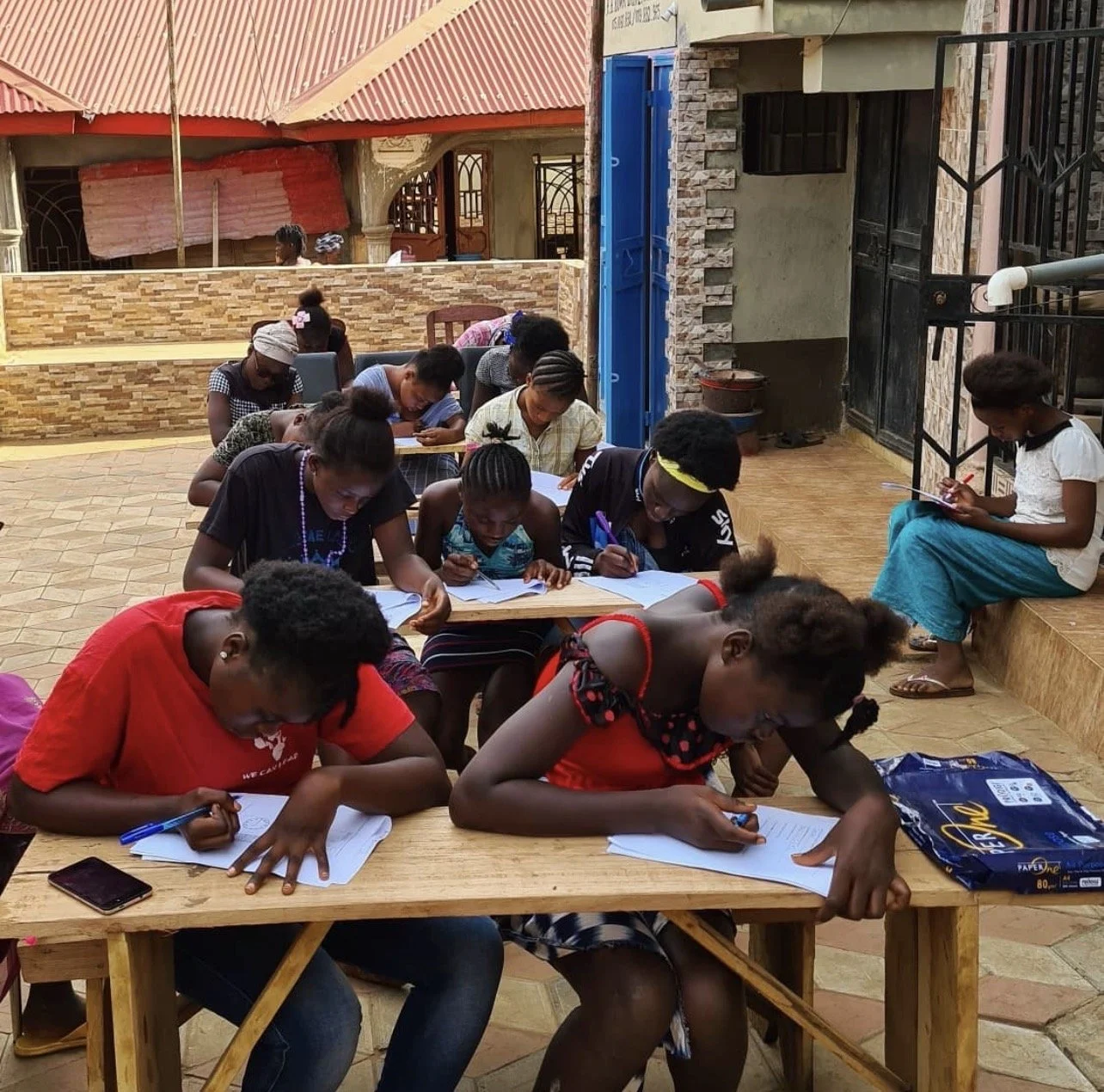
The first Community Girls Circle marked a shift. It moved the work from conversation into something more intentional : creating a space where young women could return, build trust, and engage with guidance that was practical and ongoing.
From there, the organisation expanded its presence through public discussions, national collaborations, and community-based work across different vulnerable groups. This period was less about scale and more about understanding: what was needed, what was missing, and what would actually work in this context.
Formal registration in 2024 marked a structural transition, but not a change in direction. It allowed the work to be organised more deliberately, while maintaining the same grounding in lived realities.
What defines the organisation now is not just what has been done, but how it is being approached going forward.
There is a clear shift towards building systems that are easier to access and more coherent to navigate. This thinking informs initiatives like Section 23 and Big Madam, both designed as practical entry points into something more connected and more reliable.
Safe Space Sierra Leone continues to evolve with a focus on precision: understanding the gaps, responding to them directly, and building in a way that is considered, not assumed.

Meet Adeola
Founder & Chief Executive Officer
Adeola Carew leads the development of Safe Space Sierra Leone with a focus on how support is structured, delivered, and experienced reliably and consistently by the people it is meant to serve. This thinking informs the design of the organisation’s programs and its longer-term direction.
A survivor of sexual violence, she founded the organisation when she was nineteen (19) years old in response to the gaps in care and information she experienced in the aftermath.
Years later, she is currently mobilising resources to develop Big Madam, a model that combines digital access with a physical support centre to revolutionise how women access the help they need from verified services in the wake of gender-based violence.
Adeola is a Barrister and Solicitor of the High Court of Sierra Leone, with a Bachelor of Laws (LL.B) and a Master of Laws (LL.M) in International Law and Human Rights (Distinction). Her academic training shapes how she approaches questions on health equity, gender justice, and responsible system design and accountability in real-world contexts.
She placed first in the entire country in the West African Senior School Certificate Examination (WASSCE) and has received multiple other recognitions, including GAA Poet of the Year.
Alongside her social system design work, she is a published writer and spoken word artist, using language as a tool for social commentary and and perception shift.
Her work is defined by a consistent approach: understanding what exists, identifying what is missing, and building the necessary.